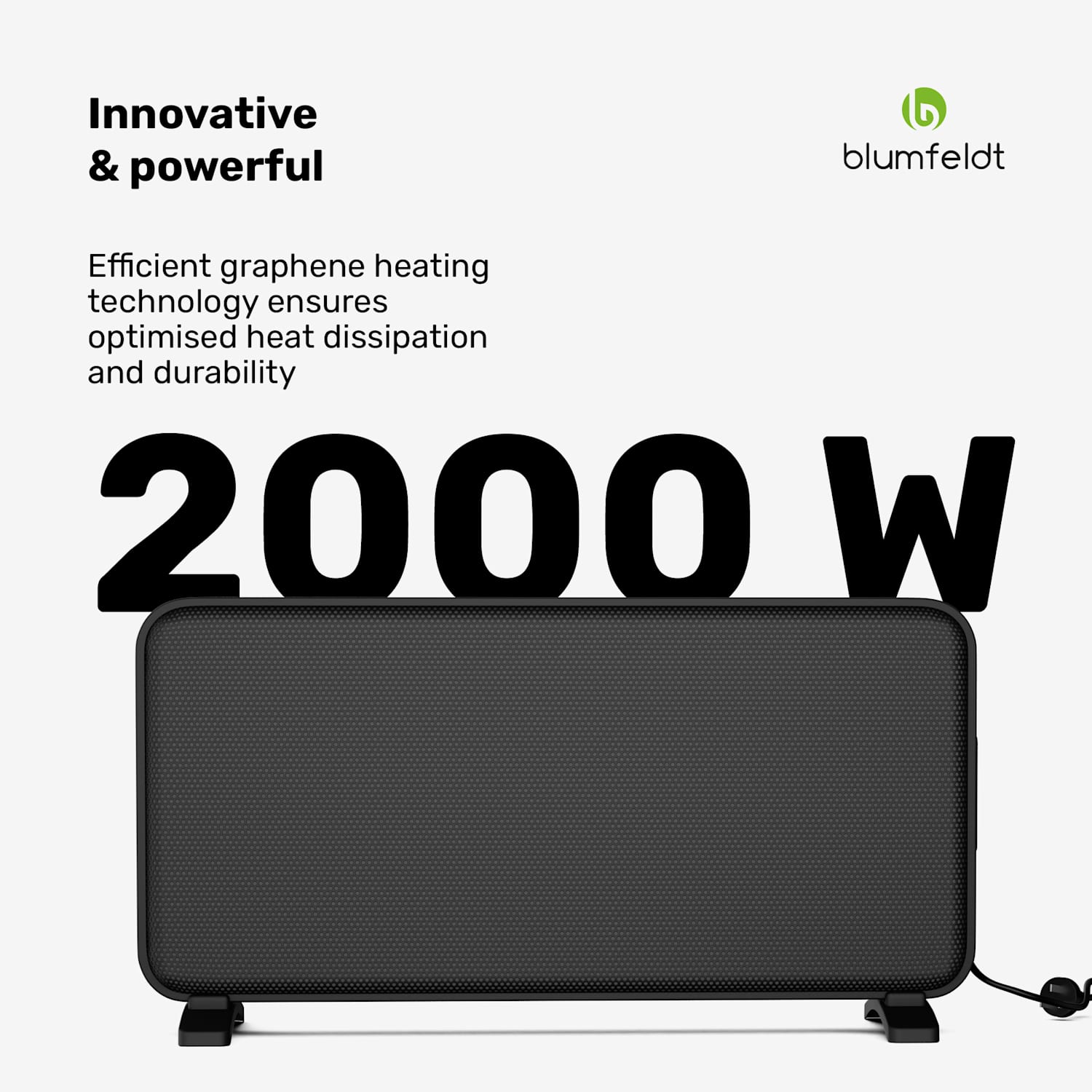
I bought this heater in combination with a 2000W mica heater for comparison after my house main heating system died and has to be repaired (try to find a tech guy that touches old gas heaters...).First off, it is not all far infrared. This heater has quite some convection heating going on too. Which is good.Sitting in the "light" side, meaning, in front of the heating panel lets you feel the radiation heat being absorbed by your skin. But on the "shadow" side, meaning on the backside or anything left or right or on top of it, as well as on the backside, things very much stay cold. My room thermometers stay 4 to 7 degrees C lower than the heaters thermostat, because they are on the "shadow" side of the heater. And the convection is maybe 20% max. on this type of heater.This heater is one-directional. The backside stays relatively cool and is fully covered.It has holes on its backside for wall- or if you are dangerously brave, ceiling mounting. Some spacers for that are included. Screws or other installation material are NOT. Considering the low range of the heating, it is most likely many buyers will use it standing nearby anyway - not on a wall far away not giving any radiation heat any more.On first use, open the windows for at least 10 minutes. It has a sweet chemical smell that fades slowly after 30 minutes of maximum power usage. After 10 minutes it is low enough to be safe, I think.The best part of this heater is that it is really and completely noiseless. No mains power frequency hum, nothing.And it seems quite safe. The top side is getting hot enough than you can burn yourself by touch. But 1cm away from the case the temperatures are safely low.Apropos case. It is a very stable steel frame (mine came with some plastic or steel parts rattling around on the inside), with a hexagonal front mesh out of steel with the flimsiest standing feet you can get. Which also have no rolls, in comparison to the advertising pictures. But since this heater is not very heavy, you can live with the cheap plastic feet. Unless you have children or pets which might fall or lean against the heater itself or kick it over.The thermostat is controlled by two infrared sensors on top of the heating element inside the case. Aprox. on the 1/4th and 3/4th position of the width. And since convection heat is just a small portion of this heating system, you get cold instantly when the thermostats turn off because they "sense" 24 degrees C when the rest of the room has only 16 degrees C. A sad disadvantage of this heating type. And bad placement of the temperature sensors, considering the take up the temperature of the IR reflection and the convection from the front grid itself (which explains the inaccuracy).And everything is depending on these not very accurate working sensors / thermostat, because you cannot control the heater otherwise. Turning the power off means for the heater, that if you turn the power on again, it stays off until you press some touch sensitive (resistive) buttons on the right side of the case to turn it on. So you will not be able to control the heater by a smart plug connected to a smart thermometer in the room.So compared to the mica heater I also bought, you either set the thermostat to 30°C and hope for the best or freeze.And the heat instantly goes away, when it turns off. The convection heat is just a too small portion to keep up. Objects radiated by the far Infrared cool off immediately. And that is why it feels weak. (Like you are OK when standing in the sunlight on a cold temperature and windy day and then a cloud shadows the sun.)So on the plus side, absolutely silent. Does what it should do - if you are sitting in front of it and over-set the thermostat. Even tho the infrared range is very, very limited and does not heat up objects apart from yourself, or rather your skin, very well.On the negative side, the convection heat part is very small. And, I know, this is the principle of this heating type. But that also means you instantly get cold when the thermostat of the heater turns it off.Also, absolutely make sure you understand that this heater is only efficient in a sense of conversion of electricity to heat (when it is turned on). It is not really efficient, just because it has a conversion rate near to 1 (no infrared or resistance type heater is). That objects, that get radiated by the far infrared, do not really turn that radiation into heat is very dependent on the (colour, porosity, structure, density, conduction, size...) surface that the heater is "shining" on. That is probably the reason they choose a black steel mesh with enough "blocking" surface to turn some portion of the IR into conversion heat. And I probably do not want to re-decorate my room just to find surfaces that conduct the radiation to heat just to be warm. The most human reaction I would see is for buyers of this heater to turn it to at least 30°C on its thermostat while sitting in a 16°C room and 6 months or a year later heads explode because of the electrical bill. So be careful or rather mindful - or at least buy a power plug consumption meter for 5 to 10 bucks with it, so you can easily see what you or rather the heater is doing for (and against) you and your electrical costs.No pictures needed on this review, but imagine the advertised pictures without the rolls on the feet. You get no rolls.Keep the manual, do not trash it. While the main functions are quite self explanatory, others are not, like the sensing of an open window and how you have to reset that off-state by hand every time (more annoying than useful in my opinion).Also, please make sure you understand that running this heater for an hour on full power means that you have to pay 2KWh to your power supplier for that hour. If you want to use this for a longer time or frequently, make sure to raise your monthly electrical fees to meet the usage.For me in that emergency use case that would mean a whopping a hundred forty five Euros (at 25 cents per KWh) electrical costs per month just to heat one 20m² room. Ouch!Right now, with a heat pump plus installation cost more than 25k, it seems the motto is, repair old now, buy new when it is cheaper. Just a shame you have to kill your CO2-bill and the next or 2nd next gens life expectancy with that. Great choices!
Comprei este aquecedor juntamente com um aquecedor de mica de 2000W para comparação, depois que o sistema de aquecimento principal da minha casa parou de funcionar e precisa ser consertado (tente encontrar um técnico que mexa com aquecedores a gás antigos...). Para começar, ele não emite apenas infravermelho distante. Este aquecedor também possui um bom aquecimento por convecção, o que é ótimo. Sentar-se no lado "iluminado", ou seja, em frente ao painel de aquecimento, permite sentir o calor da radiação sendo absorvido pela pele. Mas no lado "sombreado", ou seja, na parte de trás, à esquerda, à direita ou acima dele, tudo permanece bem frio. Meus termômetros de quarto marcam de 4 a 7 graus Celsius a menos do que o termostato do aquecedor, porque estão no lado "sombreado" do aquecedor. E a convecção é de, no máximo, 20% neste tipo de aquecedor. Este aquecedor é unidirecional. A parte de trás permanece relativamente fria e é totalmente coberta. Ele possui furos na parte de trás para montagem na parede ou, se você for muito corajoso, no teto. Alguns espaçadores para isso estão incluídos. Parafusos ou outros materiais de instalação NÃO estão incluídos. Considerando a baixa potência de aquecimento, é bem provável que muitos compradores o usem próximo ao aquecedor, e não encostado em uma parede distante que não irradia calor. No primeiro uso, abra as janelas por pelo menos 10 minutos. Ele tem um cheiro químico adocicado que desaparece lentamente após 30 minutos de uso na potência máxima. Após 10 minutos, o cheiro fica baixo o suficiente para ser seguro, eu acho. A melhor parte deste aquecedor é que ele é realmente silencioso. Sem zumbido na frequência da rede elétrica, nada. E parece bastante seguro. A parte superior fica quente o suficiente para causar queimaduras ao toque. Mas a 1 cm da carcaça, as temperaturas são seguramente baixas. A propósito da carcaça, ela tem uma estrutura de aço muito estável (a minha veio com algumas peças de plástico ou aço soltas dentro), com uma tela frontal hexagonal de aço e os pés de apoio mais frágeis que você pode encontrar. Eles também não têm rodinhas, ao contrário do que mostram as fotos do anúncio. Mas como este aquecedor não é muito pesado, você pode conviver com os pés de plástico baratos. A menos que você tenha crianças ou animais de estimação que possam cair ou se apoiar no aquecedor, ou mesmo chutá-lo, o termostato é controlado por dois sensores infravermelhos localizados na parte superior do elemento de aquecimento, dentro da carcaça. Eles estão posicionados aproximadamente a 1/4 e 3/4 da largura. Como o calor por convecção representa apenas uma pequena parte deste sistema de aquecimento, você sente frio instantaneamente quando o termostato desliga, pois ele "detecta" 24°C quando o restante do ambiente está a apenas 16°C. Uma grande desvantagem deste tipo de aquecimento. Além disso, a localização dos sensores de temperatura é inadequada, considerando que eles absorvem a temperatura da reflexão infravermelha e da convecção da própria grade frontal (o que explica a imprecisão). Tudo depende da precisão desses sensores/termostato, pois, caso contrário, não é possível controlar o aquecedor. Desligar o aquecedor significa que, se você ligá-lo novamente, ele permanecerá desligado até que você pressione alguns botões sensíveis ao toque (resistivos) na lateral direita da carcaça para ligá-lo. Portanto, você não poderá controlar o aquecedor por meio de uma tomada inteligente conectada a um termômetro inteligente no ambiente. Comparado ao aquecedor de mica que também comprei, você tem duas opções: ou ajusta o termostato para 30 °C e torce para que funcione, ou passa frio. E o calor desaparece instantaneamente quando o aparelho é desligado. O aquecimento por convecção é insuficiente para manter a temperatura. Objetos aquecidos pelo infravermelho distante esfriam imediatamente. É por isso que a sensação é de pouca intensidade (como quando você está bem sob o sol em um dia frio e ventoso e, de repente, uma nuvem encobre o sol). Como ponto positivo, ele é absolutamente silencioso. Cumpre sua função, desde que você esteja sentado em frente a ele e ajuste o termostato para uma temperatura muito alta. Mesmo que o alcance do infravermelho seja muito limitado e não aqueça bem objetos além de você, ou melhor, da sua pele. Como ponto negativo, a parte do aquecimento por convecção é muito pequena. E eu sei, esse é o princípio de funcionamento desse tipo de aquecimento. Mas isso também significa que você sente frio instantaneamente quando o termostato do aquecedor o desliga. Além disso, é fundamental entender que este aquecedor só é eficiente na conversão de eletricidade em calor (quando está ligado). Ele não é realmente eficiente só porque tem uma taxa de conversão próxima de 1 (nenhum aquecedor infravermelho ou de resistência tem). O fato de os objetos que recebem radiação infravermelha distante não converterem essa radiação em calor depende muito da superfície (cor, porosidade, estrutura, densidade, condutividade, tamanho...) sobre a qual o aquecedor incide. Provavelmente, essa é a razão pela qual escolheram uma malha de aço preta com superfície "bloqueadora" suficiente para converter parte da radiação infravermelha em calor. E eu provavelmente não gostaria de redecorar meu quarto só para encontrar superfícies que conduzam a radiação em calor para me manter aquecido. A reação mais comum que eu imagino é a de quem compra este aquecedor, ligando-o a pelo menos 30°C no termostato enquanto está em um quarto a 16°C, e seis meses ou um ano depois, ficar furioso com a conta de luz. Portanto, tenha cuidado, ou melhor, fique atento — ou pelo menos compre um medidor de consumo de energia por 5 a 10 dólares junto com o aquecedor, para que você possa ver facilmente o que você, ou melhor, o aquecedor, está fazendo (para o bem e para o mal) e o quanto ele influencia seus custos de energia. Não são necessárias fotos nesta avaliação, mas imagine as fotos do anúncio sem as rodinhas nos pés. O seu não vem com rodinhas. Guarde o manual, não o jogue fora. Embora as funções principais sejam bastante autoexplicativas, outras não são, como o sensor de janela aberta e a necessidade de redefinir manualmente o modo desligado toda vez (mais irritante do que útil, na minha opinião). Além disso, certifique-se de entender que usar este aquecedor por uma hora em potência máxima significa que você terá que pagar 2 kWh à sua fornecedora de energia por essa hora. Se você pretende usar este sistema por um período mais longo ou com frequência, certifique-se de aumentar sua conta de luz mensal para cobrir o consumo. Para mim, em um caso de uso emergencial, isso significaria um custo exorbitante de cento e quarenta e cinco euros (a 25 centavos de euro por kWh) por mês apenas para aquecer um cômodo de 20 m². Que caro! Atualmente, com uma bomba de calor e o custo de instalação ultrapassando 25 mil euros, parece que o lema é: conserte o antigo agora, compre um novo quando estiver mais barato. Uma pena que isso comprometa sua emissão de CO2 e a vida útil da próxima geração de equipamentos. Ótimas escolhas!